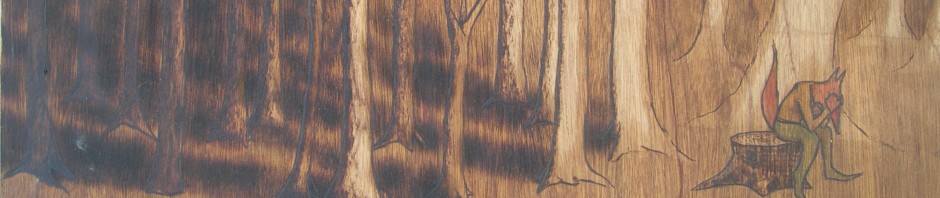
i’ll stare into the sun and let the wind burn me for fond memories and a full heart,
to move forward
i’ll stare into the sun and let the wind burn me for fond memories and a full heart,
to move forward
I can watch the weather here, the clouds build, they climb over the peaks, revealing the unseen shield over the rock; the wind moves the clouds, some fold over themselves and break apart, others have climbed fast enough to build into dark anvils; then the rain, some falling only part way then swept up again to make thinner clouds, then the rain that touches the ground, and you can see how heavy.
The climbing has changed. It has become an access point to seeing. Less of an objective, or a sport. It is this doorway into a pace of time, or a way to feel space, or see thoughts. Tactile. Allows me to see the sky move, the sun , the plants, the animals, even the air I’ll breathe. The lightning cuts through, the cars cut through, and open an elks back wide to show her strong organs; split unto the sight.
“In A Fork And Stick Thing, Revlock accentuated the kinetic representation of rhythmically spoken words. With performer Kristel Baldoz by her side, both women moved in synchronicity to strands of words such as “light, gone, time, flipping.” The sound score, composed by Jacob Mitas and Justin Moynihan, evolved throughout the piece from rhythmic text to instrumental music. While it was interesting to see what each word would ‘move’ like in Revlock’s world, when the instrumental music became interlocked with the movement, it was mesmerizing—suddenly the notes and the movement fitted seamlessly into this theatrical canvas. Revlock’s entertaining choreography led the audience through a journey of perfectly timed phrasing where every limbs’ motion had an accompanying sound. Baldoz and Revlock’s sharply executed steps were truly expressive; their focus, however, seemed to have been left in automatic mode. Their performance quality recalled Merce Cunningham’s work, in which precisely timed patterns made the dancers become focused to the point were no emotion showed. The rest of their bodies, however, contrasted their shielded stares. Revlock’s work, filled with floor choreography that highlighted the dancers’ leg extensions, refreshed the audience’s eyes and—especially—ears. She made people realize how connected the body is to rhythm and music and vibrations. At one point Baldoz took out a flute and played comically with Revlock bouncing across the stage. The mood abruptly softened, and, with both performers lying supine, the room filled with the bagpipe-esque music. This Philly artist has a talent for thematically combining dance into a music piece. It will be fascinating to see her continue to progress throughout the coming years.” – Carla María Negrete Martínez (SeattleDances.blogspot.com)
be brave young warrior
be your best beast
Love so deeply
guide by living
And live awesomely!
Burt from Mary Poppins for his steadfast goofiness while ever doomed with Mary, and his compassion for the role of the Father.
Mike Terry from Redbelt for his unyielding commitment to honor over comfort.
Jim Henson for his representation of values through Gonzo (“there’s not a word yet, for old friends who’ve just met… I’m going to Bombay India to become a movie star”) and Kermit.
Wanadi from the Emerald Forest for being the ultimate representation of a great leader: “If I tell a man to do what he does not want to do I am no longer chief.”
Fred Rogers for his speech defending PBS to the US Senate.
Chaney from Hard Times. I had to choose at least one badass: Charles Bronson.
Bobby Buchanan an advisor at Goddard College consistent in his efforts to be true to an evolving set of values that considers the well-being of humanity within the context of the world. He truly attempts to live by example.
I have been party to the composition of sounds and music for a dance performance entitled “Fork and Stick Thing”. This will be a nationally touring piece choreographed by Gabrielle Revlock and danced by Gabi and Kristel Bardoz. Jacob Mitas wrote the music for the first imagining of this piece, I have come on board since it was reworked.
Check out thirdbird’s website for info about the upcoming NYC performance:
The process of doing and being, rather than analysis and conjecture- there is an art and beauty in the repeated slog up one single mountain; as there is a beauty in embracing the always changing or varied terrain. In being- it is the art of guiding but with intention in manner and behavior, so a template maybe useful in manufacturing prior to experience, so long as the model is amenable to change. In this way the seemingly repetitive may provide a more evident process of doing and being. More change in the stillness than in the always moving.
Things don’t resolve. Problems are not to solve. The space made can merely be filled with things we want or do not want or we experience the emptiness itself.
Learning to live without others.
Learning to live without one’s self. Given over to madness or to death or such that one is unrecognizable to one’s self.
Inspired to jot down by a ridiculous radio piece on Tell Me More which stirred up thoughts had before. The ridiculous radio piece feels less ridiculous once putting myself within the context. Perhaps I am not unlike a “Black or Brown Woman” in a certain context. In fact, I would argue that I am like either one in more ways than I am not, but that is irrelevant.
There was discussion of the strong roles of these women, as care-givers. There was discussion that 1. their strong roles were not valued in our culture, and 2. their care for others has traditionally limited their care for themselves. Thus, related health disparities were brought into the discussion.
I of course thought of Mountain Guiding. As a guide or recreational climber self-care is critical in Alpine and winter conditions. It is a common trap for a guide to concern themselves almost entirely of the needs (known and unknown to the subject) of their client and to neglect their own needs. Self-care is then abandoned and we are left with similar struggles of the African American and Hispanic Care-givers. However the guide is also equipped with other tools: consideration for their leadership role. Modeling is critical in the leadership role of a Guide. It is not “do as I say” but “do as I do” (and also “as I say” when things become autocratic by necessity). But do as I do is a more effective or holistic approach for the long run. Abandoning self-care also abandons effective modeling; from this perspective self-care becomes the care of others. Ultimately it may be a more effective method in getting others to care for themselves in the Alpine setting. Perhaps in the Urban setting as well?
The radio piece was not ridiculous. But I could not listen to it anymore. I might have called in to the show to express my thoughts but perhaps my revelation was not very appropriate for their path of self-discovery. Analogies are also a tricky business; they work so well in one direction, but there are always so many considerations.
There is a threshold. You can gently push it back, stretching it further and further out. But it is none the less a threshold that must be regarded and treated delicately. Same as a muscle that is strained under inappropriate loads, or pushed again and again until a bag of feathers becomes like bricks. Without rest, or pushed too quickly and the things is good for nothing. In the arms it is a torn or strained bicep, in the mind it manifests as fear. More on fear
After weeks of traversing knife edged ridges flanked on either side by thousand foot drops, gusts of wind measuring easily 30 knots; or tip toeing as quietly and softly below cornices ready to expire, would trigger avalanche upon the in terms of avi knowledge; and now a walk into the lodge paralyzes me with fear. Returning to ‘civilization’ sinks dread in me.
And though this is no sort of civilization by standards of the civilized, rather the gathering of mad men, maladjusted, once aged animals (by the skin and roles of humanity), I fear the customs and impositions that come with human company.
Why not believe or at least use the fantastic as a model? Why do we shy away from ideal? It is not to say we should romanticize, project, expect, then delegitimize what is not our ideal, our imagination of what should be, upon people, cultures, the world, ourselves. But it would not be wrong to live our own lives by the dreams of fantasies that we would have other cultures or persons be even if only in our fantasies alone.
Let me begin by prefacing that though I will speak in absolutes and will believe them, at no point am I declaring ‘truths’. This is not to say that I will not stand behind ideas with conviction, proving a pain in the ass, but it does indicate that I will attempt to be aware of my own dogmas and at no time will come to conclusions that I would deem ‘fact’.
Fear is the indication of a lack of enough (subjectively determined in reference to the expectations of the beholder) mental or emotional strength to a specific exposure. Risk is the potential for change within a given exposure. It is typically used in reference to unwanted outcomes but the descriptive notion of ‘unwanted’ is limited to a fragment of a linear progression and also to a narrow focus on an aspect of being rather than the whole of person and being within space. Context and expectation are therefore essential components in understanding what is perceived as Risk to the subject. Risk is also traditionally used in terms of loss; transformation or change are perhaps more truthful terms for the occurrence. And threshold might better define the limits of Fear as well as the limits of hazards- in other words the point at which change (wanted, unwanted, or unnoticed) occurs.